What is the best way to store and charge a premium ebike at home?
Battery chemistry, fire safety, and everyday convenience all point to the same handful of habits. Here is how to set up a charging spot that protects both the bike and the house.
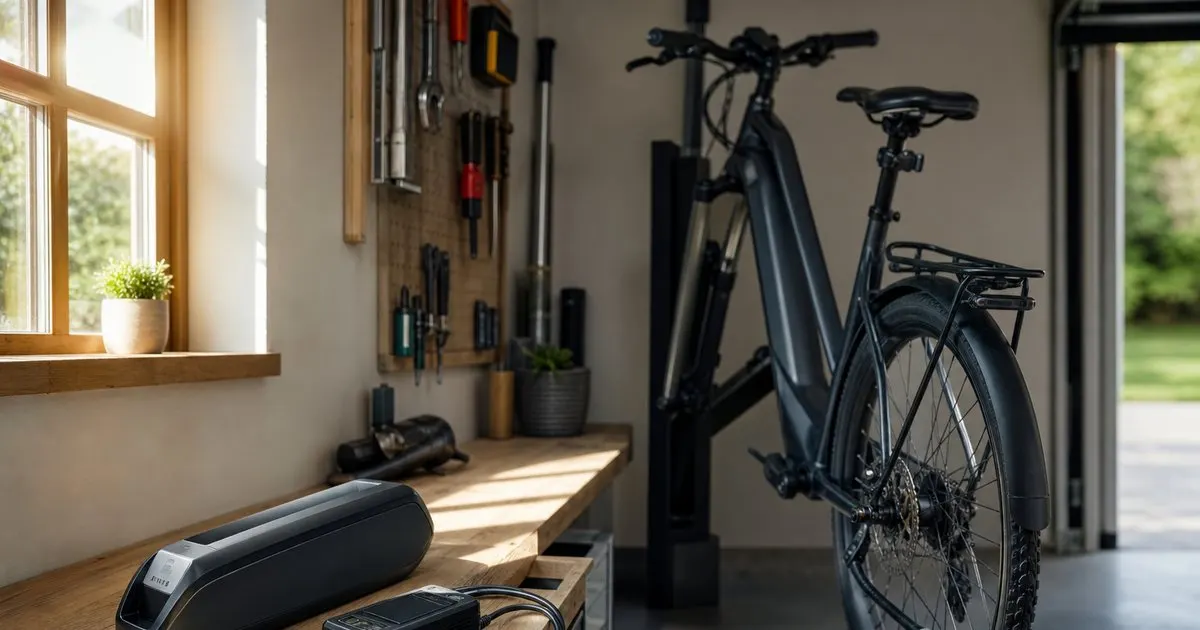
Where the bike should live
The ideal storage spot for a luxury electric bike is dry, temperate, and out of direct sun. Garages are convenient but swing widely in temperature; an unheated garage in a northern winter or a sun-baked one in a southern summer stresses the battery and the seals over years. If the garage is your only option, keep the battery indoors and leave the bike in the garage, which keeps the sensitive component in a stable climate while the frame and motor, which tolerate cold well, stay where there is space. Related: How do mid drive and hub motors compare on a luxury electric bike?
Elevation matters more than most owners expect. A wall or ceiling mount keeps the bike off a floor that may be damp, salted, or dusty, and it protects paint and carbon from being knocked by car doors and garden tools. Because a premium ebike is typically heavy, choose a mount rated for well above the bike's weight, anchored into studs or masonry rather than drywall. Hanging by the front wheel is fine for most frames, but check the manufacturer's guidance if the bike has a carbon rim or an integrated front light that could be stressed. Related: What actually justifies the price of a high end electric bicycle today?
Keep reading: What actually justifies the price of a high end electric bicycle today?, How do mid drive and hub motors compare on a luxury electric bike?, What battery range can you realistically expect from a premium electric bicycle?. See how EbikeLuxe helps you the definitive guide to high-end electric bicycles.
Charging habits that extend battery life
Lithium-ion cells age fastest when they sit at full charge in a warm room or when they are repeatedly drained to empty. For daily riders the practical rule is to charge after the ride once the pack has cooled to room temperature, and to stop somewhere short of full unless a long ride is planned the next morning. Many premium systems offer a charge limiter in the app or on the charger; use it. A pack that spends most of its life between a modest minimum and a partial maximum will typically deliver more seasons of useful capacity than one kept pinned at full.
Use only the charger supplied or explicitly approved by the bike's manufacturer. Third-party fast chargers may deliver the right voltage but the wrong communication protocol, which can bypass the battery management system's safeguards. Let a battery that has been ridden hard or brought in from the cold rest before plugging in; charging a cold or hot pack is where much of the long-term damage is done. For a bike that will sit unused for weeks, store the battery at a partial charge, roughly half, and top it up every month or two rather than leaving it on the charger.
Fire safety without paranoia
Battery fires on premium bikes from established manufacturers are rare, but the consequences when they do happen are severe enough to justify a few simple precautions. Charge in a spot with nothing flammable within arm's reach, on a hard surface, and away from the exit path of the house. Avoid charging overnight while asleep in a small apartment if you can, and never charge a battery that has been dropped, dented, punctured, or exposed to water until a dealer has inspected it. Swelling, an unusual smell, or heat during charging are reasons to stop immediately and move the pack outdoors.
When buying, look for a battery and charging system that carry a recognized electrical safety certification, such as UL 2849 for the complete ebike system or UL 2271 for the battery pack; at least one major US city now requires such certification for ebikes sold within its limits, and others are considering similar rules. A smart plug that cuts power on a timer, a dedicated smoke detector near the charging spot, and a lithium-rated fire blanket or extinguisher are inexpensive additions relative to the bike. These are the same measures many condo boards and insurers now ask about, so having them in place can also smooth conversations with a building manager. Related: What battery range can you realistically expect from a premium electric bicycle?
Setting up a charging corner that you will actually use
The best charging setup is the one that makes the right behavior effortless. Mount the charger on the wall at waist height, route the cable so it reaches the bike on its stand without the battery being removed, and add a small shelf for the display, keys, and a microfiber cloth. If the battery is removable and you prefer to charge indoors, a dedicated shelf or metal tray near an outlet, away from paper and fabric, keeps it from migrating to the kitchen counter.
For owners of more than one ebike, or households with a cargo bike and a commuter, a single wall-mounted power strip with individual switches lets you charge selectively and confirms at a glance that nothing is left powered. Keep a simple log in the app or a notebook of full charge cycles and any warnings; it becomes valuable evidence if a warranty claim is needed and useful documentation when the bike is sold. A tidy, deliberate charging corner is also a subtle signal to a future buyer that the bike was cared for. Related: Which frame materials matter most when selecting a high end electric bike?
- Store the battery indoors at a stable temperature even if the bike itself lives in the garage.
- Charge after the pack cools, stop short of full for daily use, and use only the approved charger.
- Charge on a hard surface away from exits and flammables, and never charge a damaged pack.
- Prefer systems with recognized electrical safety certification and add a timer plug and smoke detector.

Julien Jimenez
Julien Jimenez is an independent software builder based in Paris. He designs, ships, and operates focused SaaS products for small businesses and independent professionals. Read the full author page.
The Fine Electric Bicycle, Defined
The definitive guide to high-end electric bicycles. EbikeLuxe is built to help you put this into practice.
Explore the collectionMore from the EbikeLuxe blog
Get the complete electric bikes guide
Our full buying guide, the price guide, and new research as we publish it. One email, no spam, unsubscribe any time.