Which electric bike class should a US rider choose for legal daily commuting?
Class 1, 2, and 3 are not marketing tiers; they determine where you can ride, how fast, and sometimes whether you need a helmet. Choosing correctly keeps a luxury ebike useful rather than sidelined.
What the three classes actually mean
The three-class system used by most US states defines an electric bicycle by how the motor helps and how fast it helps. A Class 1 bike provides assistance only while the rider is pedaling and stops assisting at 20 miles per hour. A Class 2 bike can be propelled by a throttle without pedaling, also limited to 20 miles per hour. A Class 3 bike is pedal-assist only but continues assisting up to 28 miles per hour. All three share the federal consumer product definition of a low-speed electric bicycle with a motor rated below 750 watts and fully operable pedals. Related: What actually justifies the price of a high end electric bicycle today?
The classes matter because access rules key off them. Class 1 bikes are generally treated most like conventional bicycles and allowed on most bike paths and many trails. Class 2 bikes are usually grouped with Class 1 but are sometimes excluded from natural-surface trails. Class 3 bikes, because of their higher assisted speed, are most often restricted to roads and on-street bike lanes, may carry a minimum rider age, and may require a helmet regardless of the rider's age. The exact rules vary by state and sometimes by city, county, or land manager. Related: Which frame materials matter most when selecting a high end electric bike?
Keep reading: What actually justifies the price of a high end electric bicycle today?, How do mid drive and hub motors compare on a luxury electric bike?, What battery range can you realistically expect from a premium electric bicycle?. See how EbikeLuxe helps you the definitive guide to high-end electric bicycles.
How the choice plays out on a real commute
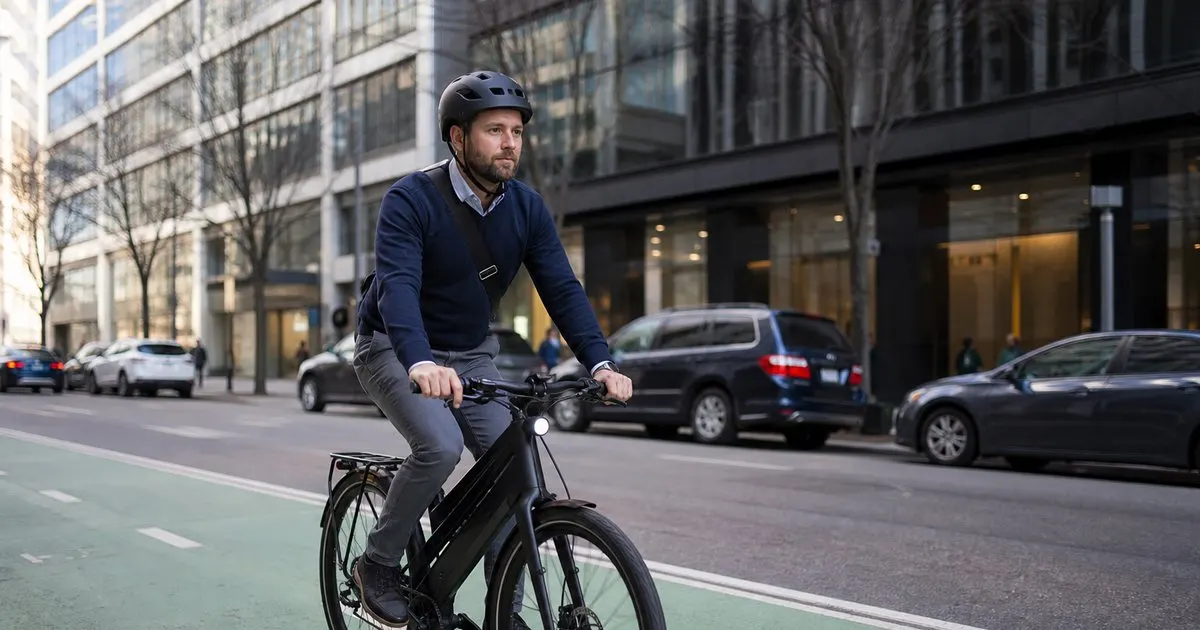
For a rider whose route runs mostly on urban streets and painted bike lanes, a Class 3 bike is often the more useful tool. The higher assist ceiling lets you keep pace with slow traffic, cross intersections decisively, and shorten a long commute noticeably. Luxury commuter ebikes are frequently offered in a Class 3 configuration for exactly this reason, and the extra speed feels natural on a well-built frame with strong brakes and good lighting.
For a rider whose route uses a river greenway, a rail trail, or a park path for a meaningful stretch, a Class 1 bike avoids the risk of being ticketed or, more commonly, being asked to leave. Many of those paths post signage limiting access to Class 1, and enforcement is inconsistent but real. A Class 2 throttle can be valuable for riders with knee issues or those who carry heavy loads from a standstill, but it is worth checking whether your local paths allow it before paying for the feature. Related: What battery range can you realistically expect from a premium electric bicycle?
Details that catch buyers off guard
Several premium ebikes ship as Class 1 but can be reconfigured to Class 3 through a dealer or the app, and some can be locked to Class 1 for path use and switched back for road riding. Check whether that switch is user-accessible, and remember that the sticker on the frame is what an officer or ranger will read. A bike labeled Class 3 is a Class 3 bike on the path regardless of the mode it is in. Some states also require a speedometer on Class 3 bikes, which affects display choice.
Anything outside the three classes deserves caution. Bikes with motors rated above 750 watts, throttles that exceed 20 miles per hour, or assist that continues past 28 miles per hour fall outside the ebike definition in most states and may be treated as mopeds or motor vehicles requiring registration, a license, and insurance. Those products rarely appear in the luxury segment, but a buyer tempted by a high-power bike sold as an ebike should understand that it may not be legal on the same streets and paths as a compliant Class 3. Related: How do mid drive and hub motors compare on a luxury electric bike?
Choosing for your route, not the brochure
Before buying, map your actual commute and identify each segment: public road, on-street bike lane, protected lane, multi-use path, park trail. Look up the state rule for each class and then check the local agency that manages the path or park; city and county websites usually publish the ebike policy in a page or two. If more than a small part of the route is limited to Class 1, a Class 1 bike or a switchable bike is the wiser choice.
Also consider the passengers and cargo you carry. Many states apply the same class rules to cargo ebikes, but some add a minimum age for children as passengers or restrict throttle use with a child seat. A Class 3 cargo bike is a legitimate and increasingly common car replacement in dense cities, but the higher speed with a heavy load argues for the strongest brakes and the most attentive riding. Whichever class you choose, a premium bike with integrated lights, a bell, and reflective elements will satisfy most equipment rules without extra purchases.
- Class 1 assists to 20 mph while pedaling, Class 2 adds a throttle to 20 mph, and Class 3 assists to 28 mph.
- Class 1 enjoys the widest path and trail access; Class 3 is usually limited to roads and bike lanes.
- The class label on the frame governs where you can ride, regardless of the mode you select.
- Map each segment of your real commute and check the state rule plus the local path policy before buying.

Julien Jimenez
Julien Jimenez is an independent software builder based in Paris. He designs, ships, and operates focused SaaS products for small businesses and independent professionals. Read the full author page.
The Fine Electric Bicycle, Defined
The definitive guide to high-end electric bicycles. EbikeLuxe is built to help you put this into practice.
Explore the collectionMore from the EbikeLuxe blog
Get the complete electric bikes guide
Our full buying guide, the price guide, and new research as we publish it. One email, no spam, unsubscribe any time.