Why does cold weather cut the range of a premium electric bike?
The battery is not broken and the motor is not weaker. Cold changes the chemistry inside the pack, and a few habits recover most of what winter takes.
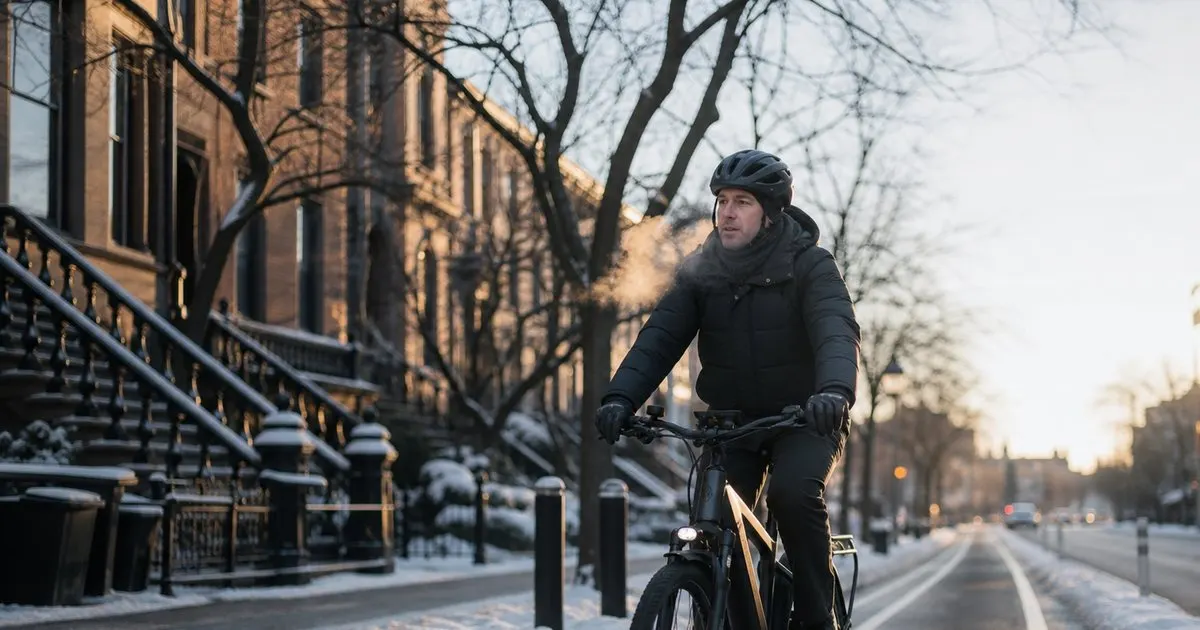
What cold actually does inside a lithium-ion pack
A lithium-ion battery stores energy chemically and releases it through the movement of lithium ions between electrodes. Cold slows that movement. The electrolyte thickens, internal resistance rises, and the pack cannot deliver current as easily, so the voltage sags under load. The battery management system reads that lower voltage as a lower state of charge and reports a range figure that seems to collapse. The energy is still largely there; the pack simply cannot hand it over as freely, and some of it is lost as heat inside the cells.
The effect scales with how cold the pack itself is, not just the air. A battery that has sat in an unheated garage overnight starts the ride cold to the core and may not warm meaningfully until well into the trip. A battery brought from a warm house and installed just before departure starts near room temperature and generates its own warmth under load, which is why two riders on identical bikes can report very different winter range on the same route.
Keep reading: What actually justifies the price of a high end electric bicycle today?, How do mid drive and hub motors compare on a luxury electric bike?, What battery range can you realistically expect from a premium electric bicycle?. See how EbikeLuxe helps you the definitive guide to high-end electric bicycles.
The other reasons winter miles cost more
The battery is not the only factor. Cold, dense air increases aerodynamic drag, and winter riders sit more upright in bulky clothing, which increases it further. Tires with lower pressure on cold mornings roll slower, and wet or slushy surfaces add resistance. Winter also brings more lights, more stop-and-go on cautious roads, and more use of higher assist levels because the rider is bundled up and less inclined to work. Each of these is small on its own; together they can rival the chemical effect.
Grease in the hubs, bottom bracket, and freehub also stiffens in the cold, and a chain or belt coated in road grime adds friction. Riders who see winter range fall sharply often find that a clean drivetrain, correctly inflated tires, and a slightly lower assist setting recover a meaningful share of the loss. It is worth separating what the battery is doing from what the rest of the bike is doing before concluding that the pack has aged. Related: What battery range can you realistically expect from a premium electric bicycle?
Habits that protect both range and battery life
Store the battery indoors at room temperature and install it immediately before riding. If the pack is not removable, keep the whole bike in a heated space when possible or at least out of the wind. Insulated neoprene battery covers help a pack keep the warmth it generates, although they do little for a pack that starts cold. Ride in a moderate assist level for the first few minutes to let the cells warm gently rather than demanding full power from a cold pack.
Charging deserves particular care. Charging a lithium-ion pack while it is below freezing can cause lithium to plate on the anode, a form of damage that is permanent and reduces capacity. Many premium battery management systems refuse to charge a cold pack for this reason, but not all do. Bring the battery inside, let it reach room temperature, and only then plug in. After a wet ride, wipe the contacts and let the pack dry before docking it. Related: What is the best way to store and charge a premium ebike at home?
Planning winter rides on a luxury ebike
For range planning, assume a conservative reduction in cold weather and build routes with a margin, particularly on longer rides where a cold, sagging pack may hit its low-voltage cutoff earlier than the display suggested. Lower the assist level, ride a steady cadence, and shift so the motor stays in its efficient band. If your bike supports a range extender or a second battery, winter is the season it earns its cost. Related: How do mid drive and hub motors compare on a luxury electric bike?
Winter is also when a premium ebike's other attributes matter most: integrated lighting that runs from the main battery, fenders that keep slush off the drivetrain, hydraulic brakes that work in the wet, and studded or wide tires for grip. Rinse salt off the frame and drivetrain after rides, dry the bike, and lubricate the chain more often than in summer. A bike that is cared for through the cold season will typically emerge in spring with a battery that has aged no faster than one that hibernated. Related: What actually justifies the price of a high end electric bicycle today?
- Cold thickens the electrolyte and raises internal resistance, so the pack delivers energy less freely and reads lower.
- Dense air, bulky clothing, low tire pressure, and stiff grease add to the loss beyond the battery.
- Keep the battery indoors, install it just before riding, and let it warm gently in a moderate assist mode.
- Never charge a pack below freezing; let it reach room temperature first to avoid permanent capacity loss.

Julien Jimenez
Julien Jimenez is an independent software builder based in Paris. He designs, ships, and operates focused SaaS products for small businesses and independent professionals. Read the full author page.
The Fine Electric Bicycle, Defined
The definitive guide to high-end electric bicycles. EbikeLuxe is built to help you put this into practice.
Explore the collectionMore from the EbikeLuxe blog
Get the complete electric bikes guide
Our full buying guide, the price guide, and new research as we publish it. One email, no spam, unsubscribe any time.